A few people commented on my reference to the Cannibal Queen book in a recent post about my favourite aeroplanes and asked what other books about flying I like. Apart from my (very) early years reading ‘Biggles’ books, I have read only a few really good books about flying. Here is a list of five of the best, in no particular order. Having already mentioned the Cannibal Queen, although it is a favourite, I have not included it in the list.
The Wild Blue Yonder – Book of Aviation.
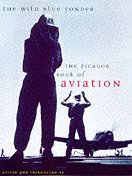 This is a non-fictional account of aviation in the 20th century, originally published in 1997. Allowing for the almost 20 years since its publication, this is an still an engrossing account of flying and aeroplanes – from the early pioneers like Saint-Exupéry and Markham and their lonely solo flights through to breaking the sound barrier with Chuck Yeager and many before, after and in between. Even including Biggles! It’s not a cheap book at over A$75 (if you can find a new one) but is completely absorbing and a marvellous compilation which you can dip into time and again and still find something new. Searching the usual book websites will turn up secondhand copies of varying qualities from as little as A$5 but make sure you know who you’re ordering from before leaping to buy!
Wind, Sand and Stars by Antoine de Saint-Exupéry
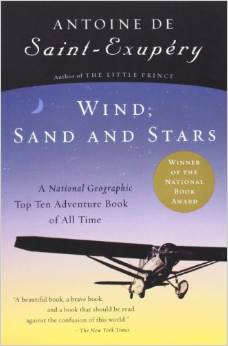 Against a backdrop of flying the mail routes in the Sahara and South American Andes, Saint-Exupéry writes of friendship, death and heroism. The book describes his exploits and, in particular, his near fatal accident in the Sahara Desert, when he and his navigator/engineer almost died of thirst and dehydration after surviving the initial crash. The book was originally published in French in 1939 but was soon translated into English – and, shortly afterwards, significantly changed, as the author felt some of the content was not appropriate for its USA readers. In French, the book was titled ‘Terre des hommes’ (‘Land of men’) with the English ‘Wind, Sand and Stars’ suggested by the translator. Although the translation is many years old, the book is still a good read, telling of times when aviation was still an extremely risky business.
Zero 3 Bravo by Mariana Gosnell
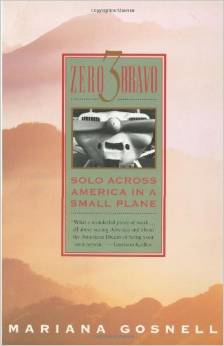 Another non-fictional account of flying across the USA in a small aeroplane – this time a 1950 Luscombe Silvaire (registered Zero 3 Bravo of the title), which, to the uninitiated, is a 2-seat metal high wing aircraft with a cruise speed of about 85 knots. This is the true story of 60 years-old Mariana Gosnell, who set out in the early 1990’s for a three-month trip from New York across the USA to the west coast and then back again. It recounts her experiences of the people she met along the way and is well-illustrated with photos she took. It’s one of those books that are very enjoyable and easy to read – the only downside (if you’d call it that) is that it will start you dreaming of (even planning) your own trip! Highly recommended.
The Spirit of St Louis by Charles Lindbergh
 I suppose no collection of aviation books would be complete without the amazing tale of the first solo flight across the Atlantic Ocean in a single-engined aeroplane. This is the book, written by Lindbergh, which was published many years – in fact over 25 years – after his epic flight. It won the Pulitzer Prize in 1954, the year after its publication. Apart from covering the flight itself, the book also describes in detail the preparation and planning for the flight and, in particular, overcoming the almost insurmountable problem of building an aircraft with enough speed, yet still able to carry a pilot and enough fuel for the journey. In the end, the aeroplane was filled with over 450 US gallons of fuel (that’s over 1,700 litres) and just about managed to take off at almost half a ton overweight – that’s a lot for a small single engine plane. How Lindbergh stayed awake during his long solitary night flight towards Europe is recounted so well, you could almost be there yourself. New copies of the book can still be found with a little digging – it was reprinted at least in 2003. Here’s a link to s short video, with subtitled commentary on the take off: ‘Well then I might as well go’
Propellerhead by Antony Woodhead
 Last but not least is this funny, charming, part fiction, part autobiographical tale, of a young man and his friend (only one of whom knew how to fly) who decide that owning an aircraft will make them chick magnets (his words, not mine). So they set out to buy a microlight/ultralight in the form of a tube, fabric and wire ‘Thruster’ aircraft – described as a flying lawn mower with two plastic chairs. Along the way, he learns about and makes lists of all the various microlighting paraphernalia and in particular, falls in love – not with a lovely young damsel – but with being up in the air and the sheer joy of flight. Captivatingly amateur in its approach, this is at the root of the book’s appeal, along with all the views of the world common to young men. In a way, it’s a ‘coming of age’ story which is well-told and, in parts, hilarious along the way.
Happy reading!
PS – have you any aviation good reads?


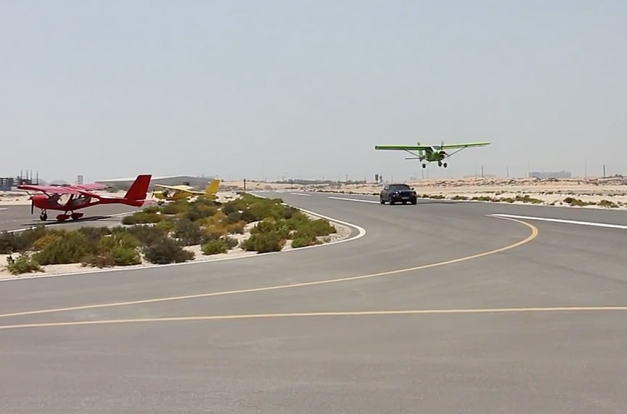
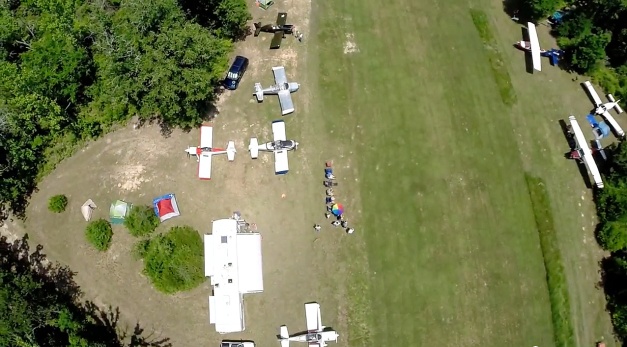

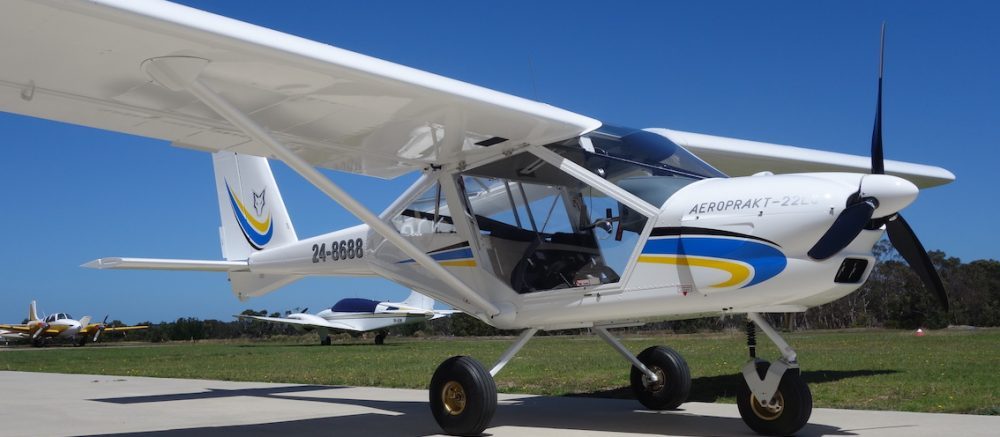
 When customers ask me about the Foxbat, the question I hear most is not ‘How fast?’, ‘How far?’ or ‘How much?’ but ‘What makes your Foxbat better than any other (or sometimes a specific) recreational/light sport aircraft?’ While I understand the reason for asking the question, it’s a bit like asking which is better: a pick-up/ute, a sports car or a sedan.
 For example – a farmer/landowner wants a strong landing gear and good safe slow speed handling so they can take-off and land in small spaces on unprepared paddocks. Outright top speed is likely not a key decider. The aircraft needs to be robust and reliable, because it’s going to be used a lot, and down-time is potentially lost money. And it probably needs to be easy and safe to fly near to the ground. And quick and easy to fix if it breaks down or gets broken.
 Another example: if you are a big person, you’ll need to be able to fit into the cabin – it’s a good job the Millennium Falcon had a roomy flight deck! And if you are heavy, you’ll need an aircraft that can carry you, a reasonable amount of fuel and probably a passenger. There are light sport aircraft on the market that can legally carry less than 200 kilos – that’s everything: pilot, passenger, baggage and fuel. Put two 90 kilo people on board, no bags, and that leaves you 20 kilos for fuel – about 28 litres, which will last about 75 minutes.
 Then there are the speed freaks – as long as they can say it goes faster than yours, it’s the one for them. But to go fast in an aeroplane demands compromises – smaller cabins, so there’s less drag; landings are potentially faster, longer and trickier; and the airframe has to be stronger (read: heavier) to cope with rough air at higher speeds…reducing the load carrying capacity. As one famous old American flying ace commented: ‘Unless you’re going at least 50% faster than the others, after a very short time you won’t notice any difference’. And next month someone else will buy one just a bit faster.
 So an important thing to think about, when deciding which aircraft, is what’s best for you – and be realistic! How often will you really fly it? Will you usually take a passenger with you or fly alone? How far will you really go on a typical flight? Are you really going to fly round Australia in it, one day? Will the aircraft really carry the weight you need it to? Why is speed important? Is getting there 10 minutes quicker, probably using more fuel, really that important?
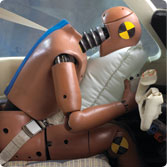
 Next, secondary safety. This ranges from the simple – eg how many bits stick out in the cabin to injure you during anything, from just getting into the aircraft, to a full-blown crash – to the complex – how the airframe will protect you (or not) if you hit something or end up inverted in a field.

 Metal is well known to have excellent impact absorbing qualities; initially it bends rather than breaks and structures can be designed to reduce the G-forces acting during a crash. A common reaction from people who’ve experienced an accident in a metal airframe aircraft is ‘it all seemed so gentle, I just couldn’t believe the aircraft was a write off when I got out and looked at it’. That’s because the airframe did its job. However, if there’s corrosion in the airframe, it may not do its protecting job properly.
 Wood is used much less in LSAs nowadays, although at least one of the most famous World War Two aircraft – the De Havilland Mosquito – had a wooden airframe. A well designed and built wooden aircraft should have good impact absorption although in some higher energy crashes, wood will break suddenly as it doesn’t bend as much as metal. It also depends how much of the airframe is glued, pegged or screwed together – believe it or not, a well-glued wooden airframe is stronger than one screwed together.
 omposites are used extensively in LSAs. Some manufacturers will tell you their aircraft are ‘carbon fibre’ but in most cases – because of the sheer expense – this is used very sparingly only in high-stress areas. Most composite aircraft are mainly or wholly some sort of glass-fibre. As boat builders will tell you, getting consistent results when manufacturing with glass-fibre is a notoriously difficult process. As a result, the empty weights of the same model of LSA can vary substantially (