Urgent new Rotax safety bulletin

Rotax SB065Rotax has just published a new safety bulletin – SB-912-065 & SB-912-065UL – about their carburettors. At least all 912ULS (100hp) engines from serial number 6 780 228 may be affected. And perhaps some others if you changed the carburettors or carburettor floats in the last couple of years.

You can find the details at Rotax-Owner.com – Service Bulletins. You’ll need to subscribe with your email and engine number if you aren’t already a member.

Please check the bulletin as it can affect the running of your engine!

Clare Valley Aerodrome Opening

Long-time Foxbat owner and instructor Dave Wilson is based at Clare Valley

Long-time Foxbat owner and instructor Dave Wilson is based at Clare Valley

In these days of (seemingly) ever-closing airfields, it’s great to hear of a new one opening – in this case just 14 kilometres to the north of Clare, in South Australia.

The airfield is the result of a 5-year (and probably longer) effort by the Clare Valley Flying Group, led by founding president Adrian Smith, to build an airfield ‘to connect Clare with Australia’. The main runway is 1200 metres, with a 600 metre cross strip and caters for a variety of different aviation activities, from crop spraying to charter, recreational to vintage.

The official opening day is on 1 November 2014. Why not fly in during the day and enjoy a very special dinner in the evening. If you are going, the Clare Valley Flying Group requests you pre-book your arrival and dinner ticket here: Official Clare Valley Aerodrome Opening.

The official opening ceremony will be performed around 2-3 pm by father and son pilots Peter & Richard Champion de Crespigny – if Richard’s name sounds familiar, he was flight captain on the ill-fated Airbus A380 Qantas flight QF32 which blew out an engine departing from Singapore airport. Although there were 5 qualified pilots and instructors on the flight, Richard was the captain responsible for getting the plane safely back on the ground – which as we all know, he successfully achieved.

I won’t be able to make the day myself, as it coincides with a very special date of my own – my 25th wedding anniversary – and I’ll be away in Queensland celebrating. But if you can get there – please go. It’s not often we get the chance to celebrate the opening of a new aerodrome!

There’s a very nice YouTube video about the aerodrome here: Clare Valley Aerodrome

PS – Rob Hatswell, responsible for Foxbat sales in South Australia will be there on 1 November – look for the ‘Foxbat Australia’ teardrop flags and go and say hello!

Antique Aeroplane spring fly-in at Swan Hill

Swan Hill AAAA

Interstate & Ercoupe, Swan Hill 4 October 2014

This weekend I was lucky enough to attend the AAAA Spring Fly-in and AGM at Swan Hill in Victoria.

Swan Hill is a great little town on the River Murray, towards the north west of the state. There is a good selection of cafes, restaurants and hotels/motels. I stayed at the Comfort Inn Lady Augusta in the middle of town which has recently been refurbished. The room was spacious and the bathroom new and stylish – not something I usually say about motels! During the stay, I also visited the Lake Boga Flying Boat Museum, about 10 kilometres south of the town – there will be a separate post about this soon. The same weekend saw the annual Swan Hill show but unfortunately, by the time we had visited the Flying Boat Museum, had some lunch and wandered the flight lines, it was getting on well for late afternoon, so we didn’t get to join some of the Antiquers who went.

Speaking as a pilot, the weekend weather couldn’t really have been much better – light winds for both the trip up and back, and high 20’s (celsius) sunny days in between.

I flew up from Tyabb in very loose formation with Jack Vevers in his Ercoupe – so loose in fact that on several occasions we completely lost sight of each other! But his ‘Coupe and my Interstate Cadet are well-matched in terms of performance, so it all worked well. It’s interesting to note that when flying such old aircraft – typically at between 75 and 85 knots – that you are happy to just chug along and enjoy the view. Not once, either way, did I wonder ‘when are we going to be there?’ The Interstate returned just on 20 litres an hour for the entire 5.2 hours of the return trip. Jack, having a smaller engine, recorded about 14 litres an hour – not bad for a couple of old timers!

The AAAA 2014 AGM was conducted at the Saturday evening dinner, between the entree and main courses. And commendably short – at around 20 minutes – it was. I like the AAAA because everyone is there to enjoy themselves, no axes to grind about ‘my plane goes faster than yours’ or ‘mine is older than yours’. Around 50-55 AAAA member aircraft were parked at Swan Hill over the weekend and around 90 people attended the dinner/AGM.

AAAA Peoples Choice AwardThe icing on the cake for me – and completely unexpected – was that the Interstate won the ‘People’s Choice Award’ at the fly-in. There are no ‘official’ awards but members fill in a small ballot paper to say which aircraft at the fly-in they liked the most. I was surprised (and very pleased) because there were some lovely aircraft there. In particular an Auster J5G Autocar, resplendent in silver and teal green paint, as well as a beautiful silver and blue Cessna 170B. Thank you to the AAAA members who voted for the Interstate – my plaque will be proudly displayed in my trophy cabinet. Well, it might be a bit lonely but who knows? perhaps there will be others. Special thanks to Nathan Eyers (also an AAAA Committee Member) of the Aviation Centre at Tyabb, who helped make sure that the Interstate was at its best for its first trip away in Australia.

Pictures of some of the other aircraft at Swan Hill over the weekend can be found here at the Foxbat Pilot Flickr Swan Hill Photo Gallery.

A small PS – I believe the beautiful Auster is for sale at a fantastic price, considering the bare metal restoration and improvement it has been given. Have a look here if you are interested: Best Auster

Date for your diary: AAAA National Fly-in at Echuca, Victoria, 27-29 March 2015.

Top 20 sport planes in Australia

Yes, this is an ultralight! Photo by Michael Priesch

I was recently reading an article on bydanjohnson.com (a big USA-dominated aviation website covering light sport and ultralight aircraft) about the best selling recreational and light sport aircraft in Germany, comparing them with what’s top of the pops in the States.

Dan’s article got me thinking about the Australian Recreational and Light Sport Aircraft (S-LSA) market. Are our tastes different from the USA, Germany and other countries? I did some basic research on registrations and it seems Australians, Americans and Germans all have their own – different – ideas about what they like…no surprise really!

A particularly stunning piece of information from Germany is that the MTO-Sport gyrocopter lists at #2, with almost 350 on their ultralight register. What do the Germans know that we don’t? I have never been a fan of gyrocopters, believing them to be inherently lethal – but things must have changed a lot for them to be #2 in the German top 10. Additionally, Rotax reports that gyrocopter manufacturers are currently the biggest buyers of 912 engines out of any aircraft sector in the world. However, gyrocopters in Australia are a bit of a ‘grey’ area, not registered either with RA-Aus or CASA. The current (unofficial) Australian gyrocopter register suggests there may be 250-260 of all types in Australia, although they clearly state that there may be others flying which are unregistered.

For information, the #1 ultralight in Germany is the Ikarus C42 with 582 flying; there are but three examples in Australia.

Slightly unexpectedly and in spite of quite tough USA insurance conditions, Americans really go for the traditional tail dragger – Cub-alikes account for a major slice of their LSA market – while here and in Germany modern taildraggers are nowhere near as popular. Too difficult for us to fly?

An examination of the Australian ultralight and LSA registers (RA-Aus and CASA/VH-) shows some interesting statistics. Out of around 5,300 current ultralight and LSA registrations:
– about 5,200 are on the RA-Aus register and 100 on the VH- register
– about 2,700 of these are factory-built, the remainder are amateur built
– there are about 450 factory-built powered weight-shift/trikes
– there are about 350 factory-built powered parachutes
– the remainder, about 1,900, are broadly speaking factory-built ‘3-axis’ aircraft

Making type comparisons with other countries outside Australia is quite difficult, as different registration regimes are used – so for example weight-shift trikes are classified differently in Germany. However, here in summary, with a few comments, are some broad brush Australian figures. Please note – the numbers exclude amateur-built aircraft

The top 10 factory-built aircraft:

1. Jabiru, all models – 556. Not surprising really, as they have been in business for 25+ years and are generally seen as the least expensive 3-axis home-market offering.
2. Airborne Windsports – 402. Weight-shift/trikes are a big chunk of the Australian RA-Aus register; Airborne, the Australian manufacturer, has easily the lion’s share.
3. Aerochute Industries335. Personally, I am surprised at the number of powered parachutes on the register; I hardly ever see them flying (maybe I don’t get up early enough!).
4. Tecnam, all models (except twin) – 174. Tecnam has a plethora of models, some of which have sold only a handful – it must make spare parts quite a headache for the factory. Interesting to see that Tecnam has sold fewer S-LSA aircraft in USA than in Australia.
5. Thruster173. This British built ‘microlight’ is still in production, although it appears that the most recent new registration in Australia goes back to the early 2000’s.
6. Austflight Drifter139. The Drifter is, alas, no longer available as a new aircraft but was at one time the mainstay of ultralight flying in Australia.
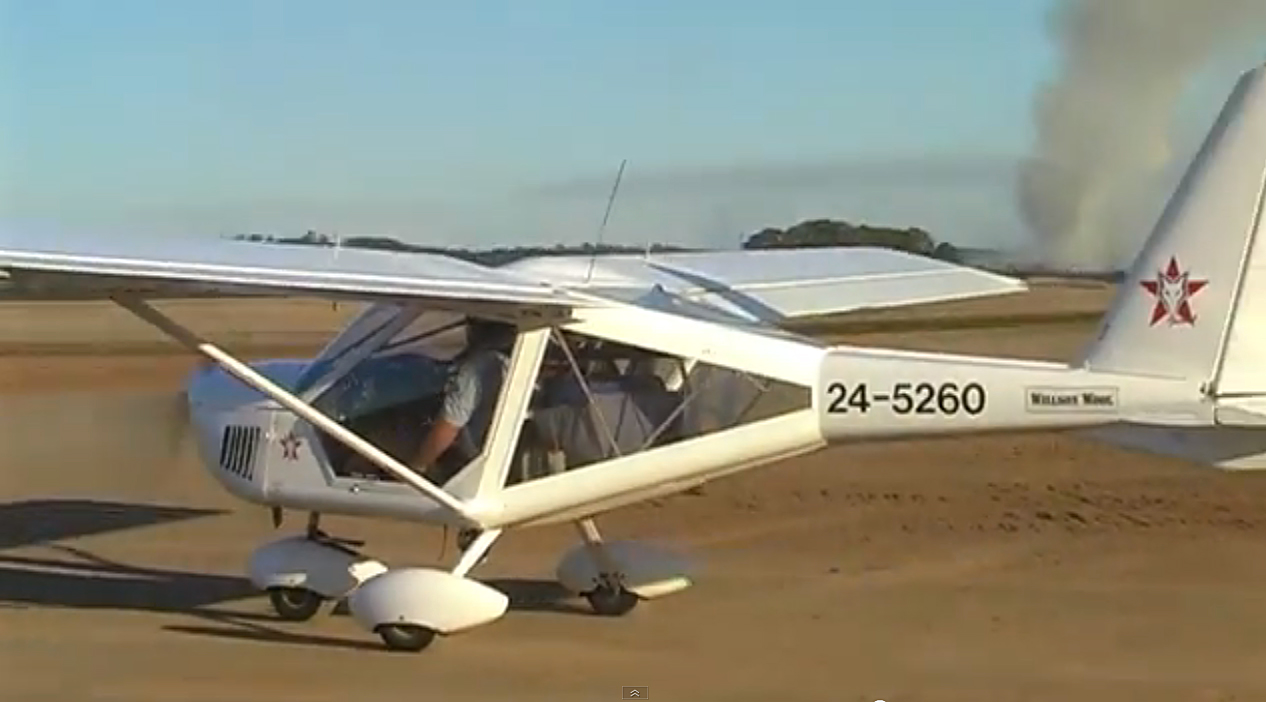
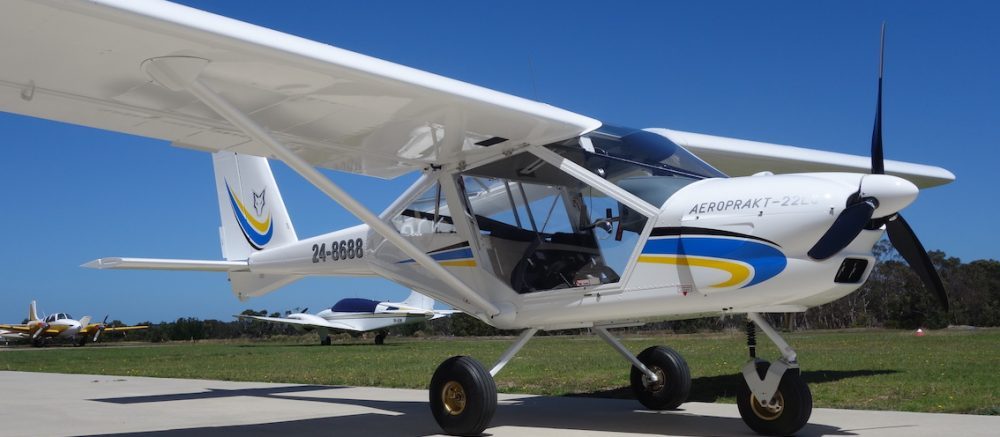
7. Aeroprakt A22 Foxbat, both versions – 128. Australia is currently the leading market for Aeroprakt A22 aircraft.
8. Australian Lightwing (ALW) – 109. I understand that although the original Lightwing is no longer made, ALW now offers a much changed LSA version, of which I could find only one registered.
9. Skyfox Gazelle71. Another mainstay of ultralight flying, no longer in production.
10. Evektor Aircraft, SportStars & Harmonys – 53. It is surprising that, despite all the hype, similar aircraft by the same designer: Sport Cruiser/Pipersport, Rokospol and Aero Bristell combined have nowhere near matched the success of the SportStar.

The next 10 factory-built aircraft:

11. Flight Design CT42. This is the most popular S-LSA sold in the States, although its lead is slowly but surely being whittled away by the Cub S-LSA replica made by Cubcrafters (276 in USA at December 2013).
12. Pipistrel, all models – 36. Made in Slovenia, this company has a reputation for innovation and fuel economy. Also have sold fewer in USA than Australia.
13. FlySynthesis, mainly Texans & Storches – 34.  Italian company, not yet accepted by FAA as S-LSA aircraft.
14. Eurofox, all models – 30. This is really an update of the old Gazelle. Currently the least expensive 3-axis factory-built S-LSA on the USA market.
15. TL Ultralight, mainly Sting & Sirius – 27. Czech company. Sting is a very pretty little plane.
16. Micro Aviation Bantam24. This New Zealand originated aircraft is still on the market but the most recent registration in Australia appears to have been over 6 years ago.
17. Savannah23. Savannah was more successful marketing kits for amateur building.
18. Alpi Pioneer19. Italian company, predominantly wood airframe. Pretty aeroplane, particularly the retractable.
19. FantasyAir Allegro18. Now made in USA.
20. Slepcev Storch18. Australian built, sadly no longer available.

Factory-built aircraft that didn’t quite make the top 20 include: Sport Cruiser/Pipersport (15), Brumby high & low-wing (15), Cessna 162 Sky Catcher (12), Zlin Savage Cub (12), Petrel (10), Sadler Vampire (9), Moyes Dragonfly (8), Kappa Sova (Sabre) (8), BRM Aero Bristell (8), FK-Lightplanes, all models (7) and Seamax (6). And there is a huge long tail of manufacturers who have registered 1-5 aircraft over the years.

A word of caution: the only two figures above, of which I am certain, are those for the Foxbat and the SportStar/Harmony, because I have the registration lists. There may be minor % errors in the other figures – but I have no reason to believe that the overall picture would change much, except maybe at the bottom end of the list. I am well prepared to eat humble pie if I have got any numbers significantly wrong. Firstly, the RA-Aus and CASA registers may not be up to date (heaven forbid!). Secondly, owners and manufacturers/importers unfortunately do not always use the same name terminology when registering aircraft, which makes tracking down every single one of a particular type quite difficult. For example, I checked ‘Foxbat’, ‘A22′, Aeroprakt’ and ‘Silverwing’ (a previous trading name of Foxbat Australia) and still the number of listed Foxbats did not match my own records of actual registrations. So it is quite likely this could be true of other makes too. I’m sure those involved will soon put me right – particularly if I quoted too low a number!

All comments welcome.
Spring fly-in: Antique Aeroplane Association

AAAA Swan HillMy next planned trip is to the Antique Aeroplane Association of Australia (AAAA) spring fly-in at Swan Hill in Victoria. This is being held – as usual, weather willing – over the 3rd, 4th & 5th of October.

Here’s what the AAAA says on their website:

“This weekend is a long weekend in most states (except ironically in Victoria!) so should provide everyone a good opportunity to make it to this riverside town. It’s been quite a few years since the Antiquers visited Swan Hill and the local Council, Aero Club and community are keen to see us back in strength.

While in Swan Hill, why not visit the many tourist attractions including the Pioneer Settlement Village and Lake Boga Flying Boat Museum, home of the Catalina flying boat.  There will be a bus service to ensure people are able to get to and from Lake Boga. For full details about Swan Hill, visit their comprehensive tourism site at http://www.swanhillonline.com/
I’m aiming to take the Interstate Cadet on its first cross-country outing since completing flight trials at Tyabb.
Come along and say hello if you can!

Portsea Beach – toy town style!

Beach near Portsea VIC 2 toytownIn an earlier post, I asked ‘How high do you like to fly?‘ and included a couple of photos, including one of Portsea Beach on the Mornington Peninsula south of Melbourne.

Andrew Cripps – of Business Image Graphics – in addition to making decals, is clearly a man of many talents. He sent me this picture of the beach with added ‘miniaturisation/tilt/blur’, which has the wonderful effect of turning an already excellent photo into something quite magical! Click on the picture for a bigger version.

Hope you like it.

Aircraft decals

DecalsWhen I first started selling Foxbats in Australia, one of the immediate needs was to organise vinyl adhesive decals for the aircraft.

Apart from the mandatory registration numbers/letters and fuel type(s), there were a whole lot more I wanted to stick on the aircraft to ensure there was no doubt as to where you could push, pull, stand, what quantity of fuel you could fill etc etc. The factory necessarily supplied the minimum required stickers but were a bit limited in that these had to apply to each country they served – as you can imagine, every nationality has their own way of marking particular aspects of the aircraft, and Australia is certainly no exception! An example is the passenger warning sticker, which is slightly different in the UK, USA and Australia.

So I looked in the yellow pages (Remember them? They were what we used before the internet…) and asked around. And I ended up approaching Business Image Graphics, in Southport, south east Queensland, near where I was based at the time. Andrew Cripps, the owner was quite candid: ‘I’ve never made decals for an aircraft before’. But he was more than willing to start. And after a few discussions about outside use (ultraviolet and other weather resistance), sizes and colours, he produced the first batch for the first Foxbat I sold in Australia – 24-4114, and my original demonstrator, 24-4163, the aircraft I helped build in the UK.

That was in 2004 and the rest (at least the last 10 years) as they say is history. Andrew now knows the requirements so well I no longer have to send him graphic (!!) details of each set – just the registrations – and he does the rest. He’s now supplied all the decals for the 130 or so Foxbats and 55-ish SportStars in Australia, as well as for a few other aircraft I have imported both for myself and others.

It’s great to see older Foxbats with registrations numbers/letters as black (or white) as the day they were delivered and they are a great testimony to Andrew and his aim to provide a high quality decal which does the job.

Andrew’s website is: http://www.quickerstickers.com.au and you can also contact him by phone on 07 5503 0282 or by email at: bigraphics@optusnet.com.au

Foxbat bird strike

9100 bird strikeI’m sorry to say that Foxbat 100 – the 100th Foxbat officially delivered in Australia – has suffered a bird strike while conducting training circuits at home airfield of Caboolture in south east Queensland.

Although seriously shaken up, instructor Bill Haynes and his student escaped uninjured and landed the aircraft safely. As well as the photo here of the damage I have others and they are not pretty. Apart from the windshield damage, the bird may also have damaged a propeller blade.

In Australia, there are typically 1,500-2,000 reported bird strikes every year. Most of these involve larger aircraft (eg Boeing 737) and happen during take-off or landing roll. There are plenty of photos of bird strike damage on the internet – some of them spectacular. It is unusual for bird strikes to cause injury (or worse) to pilots and crew, although a small number of fatalities in light aircraft over the years in Australia may have been caused by bird strikes. Here’s a link to an ATSB Review of Bird Strikes 2002-2011 published in 2012.

You will recall, I’m sure, the famous incident of US Airways flight 1549, an Airbus A320, which suffered multiple bird strikes just after take-off, causing the shut down of both engines. The pilot, ‘Sully’ Sullenberger and his crew successfully landed the aircraft in the Hudson River with no injuries or loss of life. In case you haven’t already seen it, here’s a link to an excellent Reconstruction of Flight 1549 into the Hudson River.

Caboolture has always been potentially risky for bird strikes – there is a rubbish tip quite close to the airfield perimeter and there are always large flocks of Ibis scavenging the tip.

The aircraft has now been repaired and cleaned and is back flying.

Remember – bird strikes are a real possibility near and around most coastal airfields, so keep your eyes open and don’t think the birds will get out of the way. Particularly, stupid Ibis!

New Dynon firmware for SkyView

Banner-SkyView-11-IntroductionDynon Avionics has announced a significant upgrade to their SkyView firmware, along with updated base maps and terrain data.

There is a huge host of additions and improvements, some of which – I’m thinking of the weather information in particular – are not much use to us in Australia, as the data sources are not available.

However, there are a couple of items worth noting: the SkyView can now be interconnected with the Funkwerk ATR833 and TRIG TY92 VHF radios, so frequencies can be recovered from the navigation database. So those Foxbat owners with the Funkwerk or TRIG radios – they have been standard on Foxbats for the last 18 months or so – may want to consider connection at the next major service. Access to frequencies this way saves a lot of hunting about in ERSA and/or OzRunways and then entry into the radio.

The SkyView will also now display traffic information – if you have an ADSB-compliant Mode S transponder fitted. Quite a few recent Foxbats have the TRIG TT21 Mode S transponder and this should be compatible, as Dynon’s own SkyView XPNDR262 is manufactured by TRIG.

It also looks like you’ll now be able to watch TV on your SkyView. So all my friends who have jokingly referred to the SkyView as the ‘in flight entertainment system’ can eat their words. Although personally, I’m not sure watching TV is a good idea when you’re piloting a small single engine aircraft. Or even a big one for that matter!

e-Go Aeroplanes – visit

e-Go Hillcoat & BougheyToday I went to the e-Go Centre in Cambridgeshire, UK – home of an ultra-modern single seat aircraft – the e-Go Aeroplane. Click here for information in a previous post: e-Go Aeroplanes.

I met CEO, Adrian Hillcoat and Sales & Marketing Manager, David Boughey, seen L-R in the photo here, with the currently dis-assembled e-Go prototype.

We spent 2-3 hours looking around their facility and discussing the technical aspects of their aircraft, testing schedules and production plans, as well as potential interest in Australia.

For testing purposes, the prototype has been fitted with a wonderful array of strain gauges and computerised data logging equipment. There’s nothing that’s not recorded – flight speeds, engine parameters, flight envelope, heights, airframe stresses under different flight conditions, even a complete GPS track of each and every flight. Every time an aspect of the design is changed, it’s checked and tested to ensure the desired improvement is delivered.

e-Go prototype

e-Go prototype

Although technically the aircraft fits into the UK ‘deregulated’ class – i.e. single seat with maximum weight, wing loading and stall speed limitations – the aircraft is being finalised to be capable of LSA compliance and maybe even full certification at a later date.

e-Go is aiming for production to be started during the first quarter of 2015 – much of the first year’s production has already been sold.

The aircraft will appeal primarily to the buyer looking to put some extra fun into their flying. Owners will include GA and LSA pilots who already own a more staid bigger aircraft; or perhaps owners of a fast car, motorcycle or boat, who want to add a third dimension to their fun; and even maybe glider pilots, who will find they can ‘thermal’ the aircraft and who will feel instantly at home in the glider-like cockpit.

Although the aircraft is not primarily intended for long cross-country flights, there will be space for an overnight bag behind the seat, as well as other stowage for water, maps and other items in the cockpit. Duration of the aircraft is projected to be around 3½ hours plus reserve, at 90-100 knots, so you could go places if you really want to. However, the primary purpose of the aircraft is to give the weekend flyer a big grin – the test pilot’s partner says his smile after each flight is enough to light up a sizeable town!

Towards the end of the meeting, Adrian, David and I considered for some time a variety of different purchasing options, to make ownership or part ownership a relatively easy and affordable process. There are some interesting possibilities to think about.

Personally, I believe this is one of the more exciting developments in very light aviation in a long while – the e-Go company is well funded, has a wealth of design and technological excellence, and the aircraft itself looks very good – and by all accounts, flies even better.

I think they will have no problem selling every one they can make…….watch this space!

Click here for the e-Go Aeroplane website