Foxbat Glider Tug

The Foxbat is used successfully in several countries as a glider tug and was recently tested in both Australia and New Zealand to find out just how capable the aircraft might be for this purpose.

Below is a synopsis of the New Zealand experience and a link to a video covering the Australian testing. The NZ Foxbat was a standard 100hp Rotax 912ULS powered A22LS fitted with a KievProp series 283 (71″ diameter) propeller and a Tost glider release hook. The Australian aircraft was identical, except that we used the 68″  WarpDrive propeller with tapered tips, which customers more commonly order for best cruise.

[As a short aside, after the respective towing experiences, we tested the two different propellers, to establish which would give the best static thrust for glider towing. In simple terms, at the same maximum throttle 5,700rpm engine speed, the WarpDrive tapered tips prop gave around 135kgs static thrust and the KievProp 283 series around 185kgs – close to 50% more static thrust. It is thus pretty conclusive which prop would give the best performance for glider towing, if not outright cruise speed.]

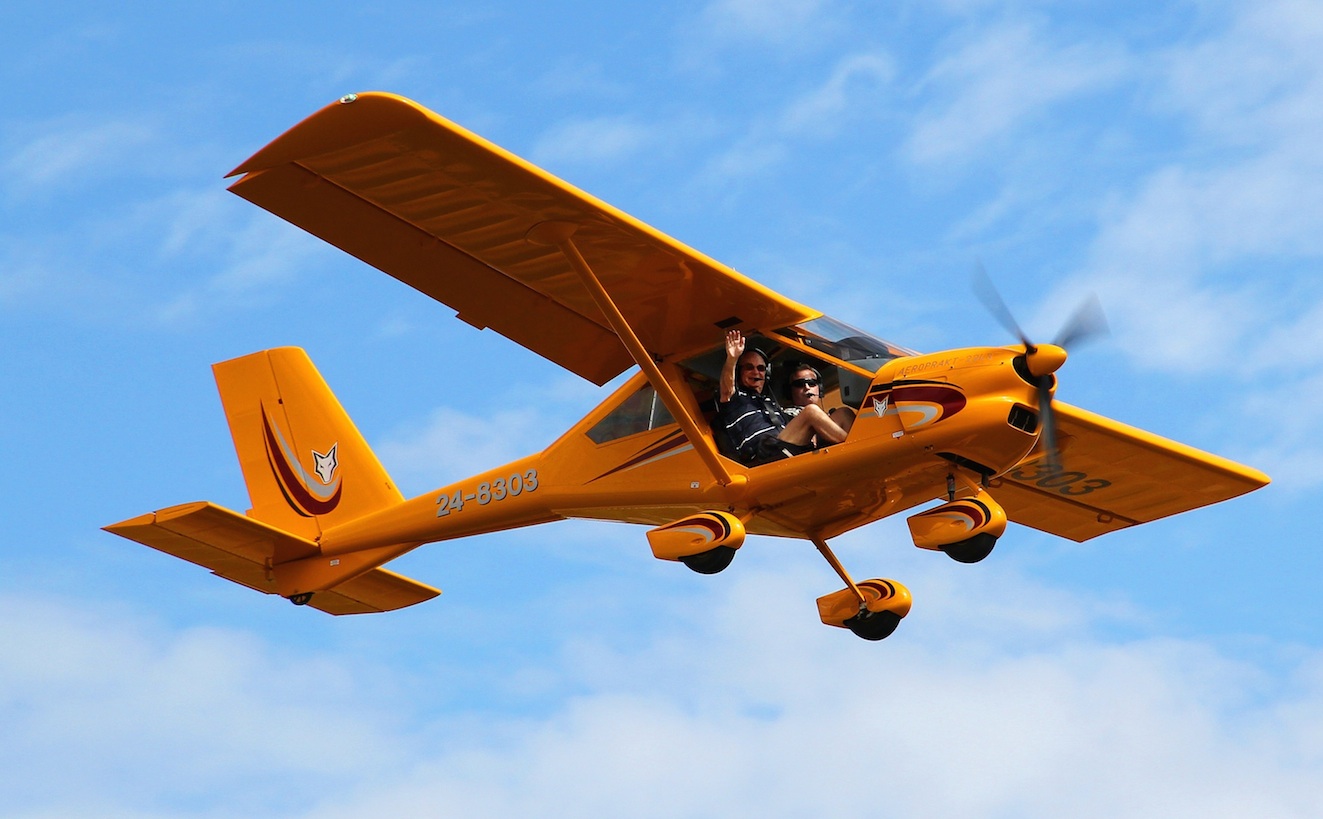
Foxbat glider towing at Benalla

Foxbat glider towing at Benalla

The tug pilot in New Zealand was Ian Williams, who has over 30 years’ experience of towing gliders. He says that depending on glider weight, the Foxbat was towing up to 2,000 feet at times between 6 and 9 minutes, from wheels off to wheels landing. This is just about the same total time as heavier GA tug aircraft, times which are also borne out by Australian tow times. What the Foxbat may lose in outright climb, it easily regains in descent, where the liquid cooled Rotax engine helps protect from shock-cooling.

With similar tow times to typical GA tugs, the Foxbat offers some useful additional advantages:
– it is much more economical on fuel and maintenance, burning well under half the fuel per tow
– it is much quieter, an important factor where residential housing is encroaching on airfields
– in an emergency, the Foxbat, being much lighter and more manoeuvrable than its GA counterparts, should be able to recover from unusual attitudes very quickly

Overall, in both New Zealand and Australia it was felt that the Foxbat could handle 75-80% of glider towing required by clubs, with only heavy, water-laden single seaters and some heavier two seat gliders outside the flight envelope. In Australia, it was noted that high-tow resulted in much better performance than the more common and preferred low-tow technique.

For Australian information, here’s a link to a short video of Foxbat glider towing at Benalla, with the Gliding Club of Victoria in Australia. Chief tug pilot Mark gives the commentary.

If you want to try out a Foxbat for glider towing at your club, please contact:
– in Australia, Peter Harlow at Foxbat Australia – +61 413 900 892
– in New Zealand, Doug King at LiteFlight Green – +64 210 285 6932
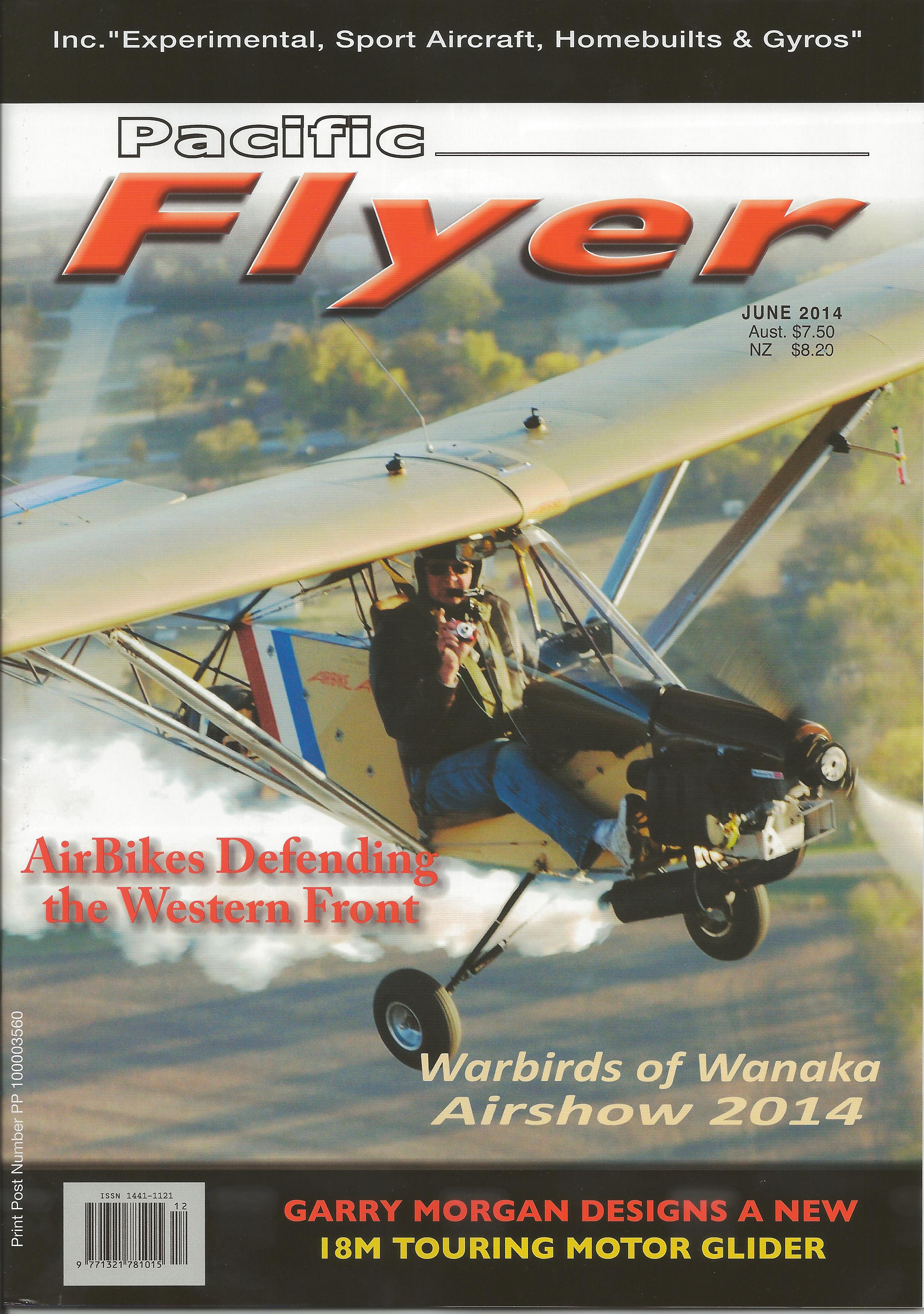
Pacific Flyer Magazine – RIP

Pacific Flyer - last cover

Pacific Flyer – last cover

Over the years, I have spent many thousands of dollars advertising the Foxbat (and a while back now, the SportStar) in Pacific Flyer magazine – including my usual half-page in the latest and – as it turns out – the last issue.

They offer a few reasons for folding (forgive the pun). I suppose top of the list must be their declining advertising revenue, but what’s caused this?

Pacific Flyer quotes the continuing effects of CASA (over) regulation of the industry, leading to buyer deterrence and disinterest. The squabbles in RA-Aus over the last couple of years cannot have been helpful either. Maybe the overall state of the Australian economy is to blame – although Australia is among the top five most successful economies in the world, even ahead of Germany, France, UK, Japan, USA etc etc, we seem to have got cold feet about debt, whether national or personal. People are not buying so many small light aircraft at the moment and, as a result, fewer advertisers are willing to reach into their pockets. So it goes.

Something Pacific Flyer would not want to mention is unfortunately what feels like a rather basic approach to design and layout in the magazine. Sometimes the quality of the photos is not good – whether this is down to the originals or the printing process I don’t know but either way, it leans towards a more amateur look. If you compare Pacific Flyer with other professionally produced aviation magazines, it does begin to appear more like a well-produced flying club newsletter. Attractive though some may find this style, in this very competitive market place, it cannot help sales. Overtly or subliminally, this design look probably puts off more readers than it attracts – however interesting the actual content.

As I said, I have been a great supporter of the magazine over the years, both financially and socially, mentioning it to customers and others alike. They have carried a great variety of articles covering the whole range of aviation, from small single seat aircraft (one’s featured in the last issue) through to warbirds and heavier metal.

So it is a great pity that another light aviation publication goes to the wall. To all at Pacific Flyer: thank you for your magazine and good luck in your next ventures.

Now where am I going to place my next series of adverts?


The Ercoupe – a unique aeroplane

The Ercoupe was first manufactured in the late 1930’s by a company called Engineering and Research Corporation (ERCO). In one form or another, it continued in production until 1970 by which time over five and a half thousand had been built.

ErcoupeThe Ercoupe is unique in at least three main ways:

– it is truly spin proof
– it was the fist mass manufactured aircraft to have a nose wheel (as opposed to a tail wheel)
– it has no rudder pedals; steering on the ground and in the air is achieved solely through movement of the steering wheel-like control yokes

Even today, the Ercoupe remains a popular aircraft and many have been restored and maintained to near-new standards. Some of the models qualify for Light Sport Aircraft (LSA) status under current regulations and are an excellent, safe and relatively inexpensive way to enjoy flying.

Here’s a link to a YouTube video about the aircraft, owned by Jack Vevers, a member of the Antique Aeroplane Association of Australia (AAAA), and a leading member of the Peninsula Aero Club (PAC) at Tyabb airport:

https://www.youtube.com/watch?v=KcZZnXlpc0A&feature=youtu.be

PS – You might just catch a glimpse of a Foxbat wing and strut during one of the air-to-air sequences. The Foxbat makes a great photo-ship. Watch this space!

Darrell Ingham – still flying

I did not know Darrell but Foxbat owner Andrew Wood has contributed the following story, which I think is a wonderful example of a tribute from pilots to a fellow flyer and his family.

Darrell’s history is quite unique. His career was as a police officer but his passion was flying. Darrell originally flew gliders before his interests moved towards Light Sport Aircraft some years later. Darrell was an instructor at Adelaide Soaring Club (ASC) and was heavily involved in introducing new students to the wonders of aviation. Darrell was a passionate man when it came to aviation and instruction. This passion was supported by his wife Sue, who is a Senior Instructor at ASC.

Karl & Andrew with Darrell's ashes

Karl & Andrew with Darrell’s ashes

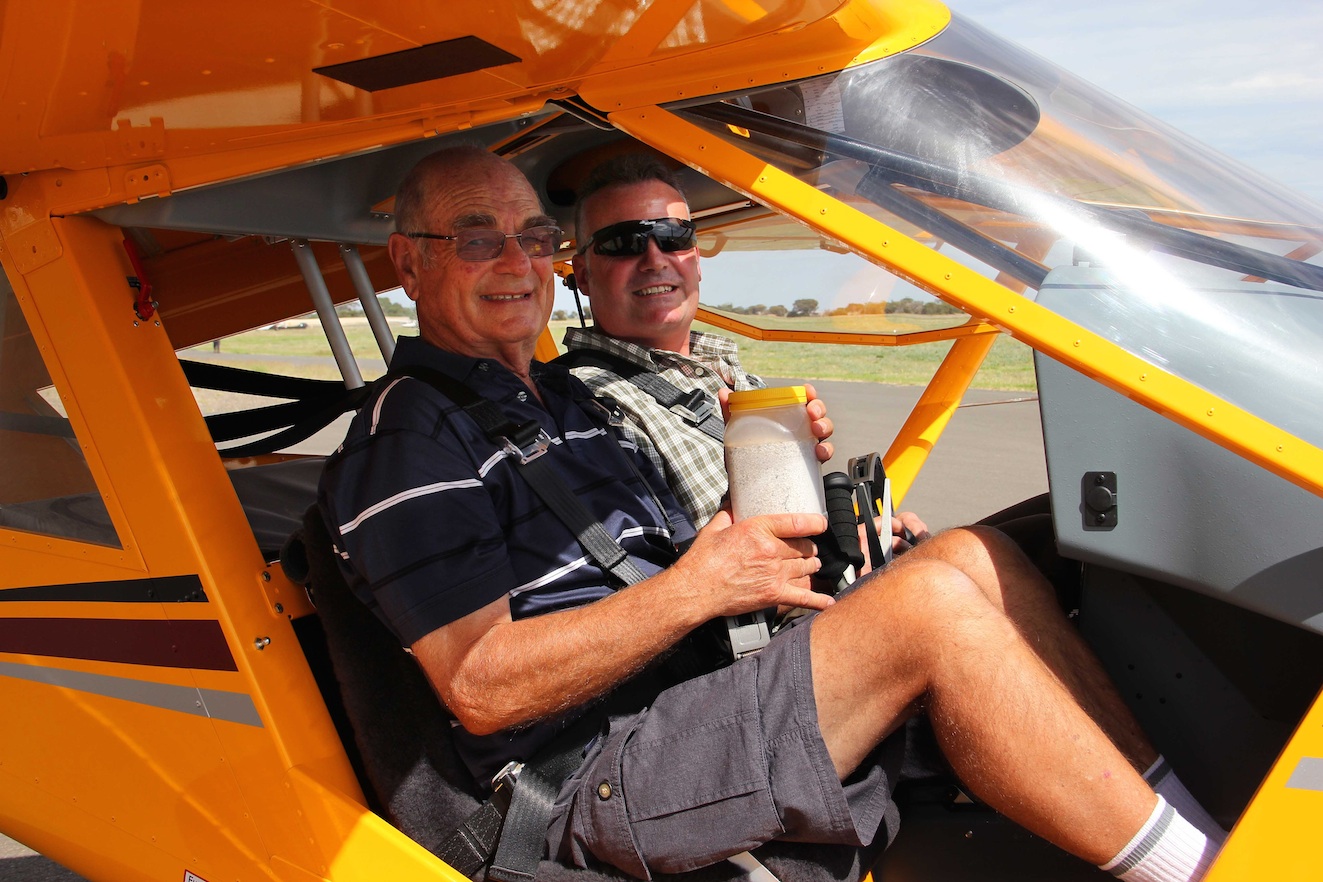
Darrell passed away on 10 March 2013 following a prolonged battle with cancer and had asked that his ashes be released over the flying field he considered a part of his life for many years. One year to the day, his wife Sue organised for Club members, family and friends to celebrate Darrell’s wishes with the releasing of his ashes with a low, slow, fly over of the field. My offer to fly my Foxbat alongside another aircraft was accepted.

Needless to say I was somewhat nervous about taking the door off the Foxbat as I was unsure just how it would behave and how the aircraft would react to flying very low and very slow to allow sufficient time for release of the ashes. We first carried out a test run and I must admit, the aircraft handled superbly – but it was loud and windy in the cabin with the passenger door off!

After a successful test run it was time for the real event. Bob Page took Sue up in his Savannah aircraft whilst I took ASC CFI, Karl Faeth in my Foxbat. My role was simply to fly a suitable circuit and descend low and slow, slightly offset to the left of runway centreline. Bob’s role – being the far more experienced pilot – was to join abreast of me to the right, no closer than 100′. Our passengers – Karl and Sue – would release the ashes simultaneously as we approached the cross runway.

Darrell's ashes 01Everything went without a hitch and we returned to the awaiting crowd for commemorative photos. To be honest, it was an easy event to volunteer for as the Ingham family are wonderful people, extremely supportive of the soaring club and those who wish to experience the thrills of aviation, on many occasions for the first time. Following the service it was whispered by many: “that’s how I would like to go, my ashes laid over the field”.

Sue had a small plaque placed over a memorial at Darrell’s family home which reads: “Darrell, still flying!” My thoughts go out to Sue and her family and I am extremely honoured to have been a part of the celebration of Darrell’s life and this very special event.

In the Loop

LoopFor quite a while I have been a subscriber to Loop magazine – an electronic monthly aviation publication. How about this for a bit of fresh air: the subscription is completely FREE!

My subscription is via my iPad – visit the app store and search for LOOP – but you can also subscribe online. Here’s the website address: http://www.loop.aero

The iPad version uses some very good and creative ways to enable you to see text and pictures. For example, you get mostly text in the ‘portrait’ orientation and in the ‘landscape’ orientation you get loads more photos. Using the LOOP app is quite intuitive – they don’t seem to be obsessed with creativity for its own sake, but just to enhance your viewing. Once you get the hang of it, you can swipe up, down and side to side, and rotate the iPad when you want more pictures. It’s a very good example of how electronic publishing can show real benefits over a printed magazine.

Even the advertisers are on board – I just love the ‘scratch card’ reveal of the Bendix King advert for their latest KT74 transponder.

The current issue – number 29 – has a great article about the Chipmunk trainer and previous issues have covered Light Sport Aircraft, STOL/bushplanes, the Red Bull racers, and many classic aircraft.

Finally, can you spot the Foxbat, which appears in every issue?

Ballistic rescue systems for aircraft

BRSA ballistic rescue system (BRS) is an option available on Foxbat aircraft – about 15 of the Australian fleet of 125 are fitted with them. Thankfully, no-one has needed to deploy a BRS on an Australia Foxbat.

However, the pilot of this Cirrus was not so lucky, although due to the BRS, he and his passengers all walked away from what otherwise might have been a nasty incident.

It was around 2pm on Saturday afternoon, 10 December 2014 at Lawson, west of Sydney in New South Wales when some sort of problem occurred with the aircraft and the BRS was deployed – an excellent example of how modern technology can dramatically improve the safety of light aircraft.

Here’s a link for more information, including a short piece of video: Sydney Morning Herald

Foxbats & Constant Speed Propellers

Kaspar pitch mechanism copyHere’s another frequent question customers ask about Foxbats – is there any benefit in fitting a constant speed (CS) or in-flight adjustable (IFA) propeller?

Unfortunately, there is no simple answer. However, here are some thoughts to consider when weighing up the pro’s and con’s. Please remember – these comments apply to the Foxbat. Other aircraft can and will have different considerations.

1. The maximum permitted continuous rpm for the Rotax 912 series engine is 5,500, whatever propeller is fitted. We therefore pitch the standard, on-ground adjustable propellers on the Foxbat so they will just reach 5,500 rpm at full power, straight and level at about 1,000 feet amsl. This gives a maximum true airspeed between 95 and 105 knots, depending on the propeller type, the size of the wheels and whether spats are fitted. At this pitch, the prop typically gives around 5,250 rpm at full power on take off and best climb speed of around 60 knots.

2. The maximum power & torque of the standard Rotax 912 carburettor engine is achieved around 5,800 rpm, which you can use for a maximum of 5 minutes at a time. Ideally, you’d use this full power rpm for take-off, and for the first couple of thousand feet of climb if you really need it. Rotax specify a full power take-off rpm of no less than 5,200.

3. Therefore, with the standard prop pitch setting on the Foxbat, although you are within Rotax limits, you are not getting full power from the engine at take-off. Even so, take-offs at maximum weight can still be achieved in 50-100 metres (at sea level), and this setting gives you the best cruise speed.

Kremen CSU4. To give a higher cruise speed on the Foxbat, a CS/IFA propeller cannot be set to run any faster than the on-ground adjustable prop. But it could be set to run up to 5,800 rpm on take-off. This will shorten the take-off run in the Foxbat and increase the climb rate. A bit.

So, in summary, a CS/IFA prop on the Foxbat will improve the already impressive take-off performance but will not increase the cruise speed.

BUT…there’s more: there are couple of uses for a CS/IFA prop – other than better climb and/or cruise – which are not often considered.

The first is to use the prop as an air-brake, when you need to descend quickly, by setting it fully fine pitch and engine at idle. The Foxbat is already fairly draggy, so doesn’t pick up speed quickly in a dive. With a fully fine pitched prop, it’s like having a great big parachute holding back the aircraft.

The second use is to allow you to keep the engine warm by using higher rpm at slower airspeeds. For example, a fully fine pitched prop on the Foxbat could allow you to run at 5,500 with an airspeed of only about 65 knots. This may be useful in poor weather when you’re looking for a landing site, or for mustering pilots who need to fly slowly most of the time.

A third use relates more to an emergency. If the worst happens and the engine loses power or stops, by setting the prop fully coarse, you can substantially extend your glide range, as there is less wind resistance on the windmilling or stationary prop.

AND…yet more: there are a couple of major disadvantages to CS/IFA props.

First is the cost. A good CS/IFA prop for a Light Sport Aircraft (LSA) like the Foxbat is going to cost at least A$5,000 more than the standard on-ground adjustable prop and probably more. You won’t get this back in fuel savings for a very long time, if at all.

Additionally, most if not all CS/IFA props weigh considerably more – as much as 10 kgs more, in some cases – than the standard props. All this weight goes right on the nose (affecting weight and balance) and comes straight out of your usable load. This isn’t so much of a problem with the Foxbat’s excellent load carrying capacity but could be on some of the heavier aircraft in the LSA category.

And don’t forget, you need a CS/IFA endorsement on your RA-Aus Pilot Certificate or PPL to legally operate an aircraft with such a prop fitted.

My conclusion – while a CS/IFA prop may have big advantages on a more slippery, faster cruising aircraft, the benefits for the Foxbat are more debatable. If you want to be able to run on the limit for the complete flight envelope (and your pocket can handle it), maybe a CS/IFA prop is worth it. Me? I like the simplicity of the Foxbat and the take-off performance is more than enough for all but the most extreme conditions. So I’m happy with one of the standard props.

What about you?

Moruya to Temora by Foxbat

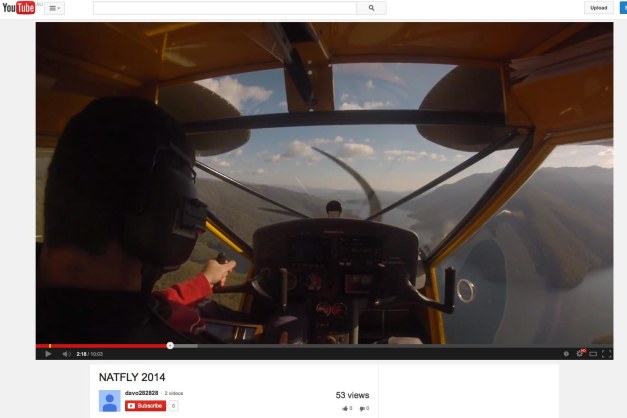
David May flightHere’s a nice little YouTube video of David May flying an A22LS Foxbat to the Recreational Aviation Australia (RA-Aus) annual Easter fly-in – NATFLY – at Temora in New South Wales. It is over 10 minutes long but has nice views of what it’s like to fly inland over the Dividing Range from the south eastern coast of Australia. Some of the reservoirs which are part of the Snowy River Hydro scheme are easily seen. Nice one David!

http://www.youtube.com/watch?v=shKfKxxKNNA

Small footnote this Foxbat is based at Moruya Airport and has controls adapted for use by pilots who have lost the use of their legs. It is available for training – contact  Sheldon Jones on 0427 102 540

Foxbat flaperon hinges

Flaperon hinge no pin

Flaperon hinge no safety pin – correct

Flaperon hinge with pin

Flaperon hinge with safety pin – incorrect


Sharp eyed Foxbat owners have noticed that the flaperon hinges have small holes drilled in the spindles which run through the centres of the hinge bearings. One or two owners have even added washers and inserted safety pins in these holes, assuming that this will add to the security of the flaperon hinge.

The factory has confirmed it is absolutely not necessary to fit safety pins – the geometry of the flaperon controls and hinges means that the flaperon just cannot come off its hinges. In fact adding safety pins may actually be detrimental to the wear of the hinges. As the wing and airframe flexes under flight loads, it is important that the flaperon is free to move on the spindles, not just up and down but also laterally.

It is also important to ensure the hinge bearings are kept lubricated, even between services if needed, to ensure they are free to slide. If you have installed washers and safety pins – please remove them now.

True Air Speed (TAS)

ASI 0-120kts smallI regularly hear and take part in discussions about True Air Speed (TAS) – I sell aeroplanes and a common question is: “What’s it TAS at then?”

The resulting discussion indicates strongly that there is not much real understanding of how the speed indicated on the Air Speed Indicator (ASI) can vary widely from the true or actual airspeed. And since the calculation of TAS is quite complex, based on indicated air speed (IAS), temperature, barometric pressure and altitude, many pilots can’t be bothered to work it out and assume IAS and TAS are much the same. Or at most a couple of knots different.

In general terms, the higher and warmer you are, the higher the TAS compared with the IAS. While this may help aeroplane sales people who can say that the ‘real’ air speed is greater than indicated on the ASI, there is in fact a very real use for being aware of TAS.

For example – say your aeroplane has a manoeuvring speed limit of 90 knots, ie the maximum speed for full control deflections or cruise in rough air. At 5,000 feet on a warm 25º Celsius day at 1013 Mb QNH your ASI indicates 85 knots – are you under the speed limit? Or are you running the risk of damaging the airframe through over-speeding?

When you work it out, your TAS is actually 95 knots and if you hit a big thermal, you run the risk of structural damage to your aircraft. That’s why calculating your TAS is important.

Many of today’s digital instrument panels calculate TAS for you, provided you set the barometric pressure (often called QNH) correctly.

For those of you without the benefit of one of these panels, here’s a link to a website that will calculate TAS for you: TAS Calculator