Visit to Europe

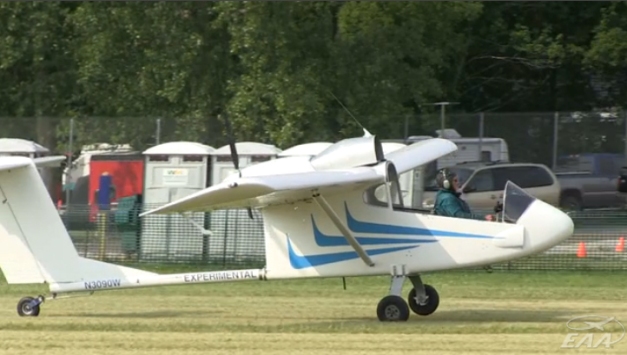
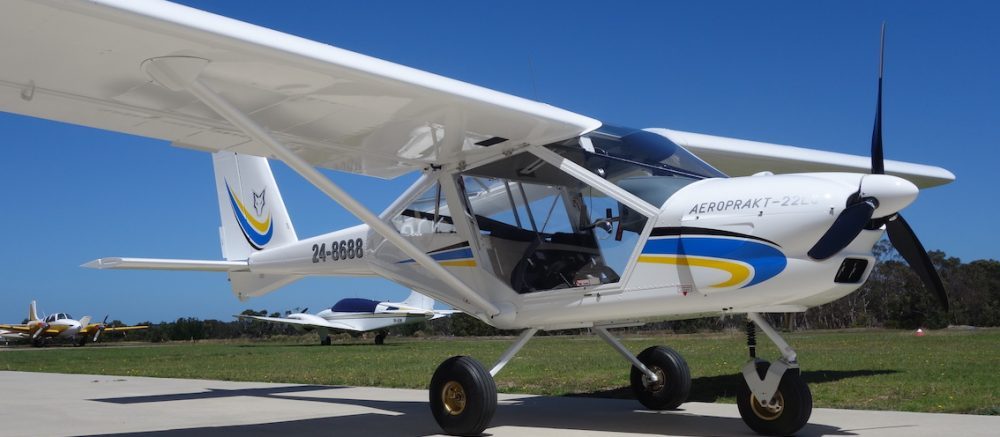
Hello everyone – I’m soon leaving for a short trip to Europe – including a visit to the Aeroprakt factory in Kiev.

As a result, blog posts may not be as frequent as usual for a while, although I’m aiming to continue as far as possible, including news and pictures direct from Kiev while I’m there.

Just before my visit to Aeroprakt, I’ll also be going to the e-Go Aeroplane factory near Cambridge in England – info and pictures ditto.

Hopefully, when I get back, spring will be well under way and – at least in Melbourne – flying weather will have improved a bit.

Meanwhile – happy flying!

Top 10 tracks for flyers

Tom PettyI seem to spend a lot of time driving these days – often the hour or so from home to Tyabb Airfield, and back. Listening to the radio is OK but usually I prefer some music, particularly if I’m going flying. So I have been building my ‘top tunes for flyers’ playlist on my iPod. So far, the list includes my personal top 10 as well as a whole list of others that didn’t quite make it. Whats your favourite flying music?

Here’s my top 10. Many of them have been covered by other artists but these are my personal favourites. I have included YouTube links to original videos (some of which are ‘vintage’ quality) and all these recordings are no doubt available through iTunes or your favourite music store.

1. Treetop Flyer – Stephen Stills. YouTube link: Treetop Flyer
2. Learning to Fly – Tom Petty. YouTube link: Learning to Fly
3. Fly One Time – Ben Harper. YouTube link: Fly One Time
4. The Yellow Piper – Kristina Olsen. YouTube link: The Yellow Piper
5. Early Morning Rain – Eva Cassidy. YouTube link: Early Morning Rain
6. Wind Beneath My Wings – Bette Midler. YouTube link: Wind Beneath My Wings
7. Leaving on a Jet Plane – Peter, Paul & Mary. YouTube link: Leaving on a Jet Plane
8. Snoopy vs the Red Baron – Royal Guardsmen. YouTube link: Snoopy vs the Red Baron
9. Watching Airplanes – Gary Allan. YouTube link: Watching Airplanes
10. Learning to Fly – Pink Floyd (different song from Tom Petty). YouTube link: Learning to Fly

Other worthy contenders but not top 10 material include: I’m a Pilot/Dos Gringos, Higher & Higher/Jimmy Barnes, Rocket Man/Elton John, Space Oddity/David Bowie, Jet Airline/Steve Miller Band, The Immelman Turn/Al Stewart.

And last but not least, a wonderfully soothing piece of choral work: Em dones força – feat Montserrat by Sergio Dalma (YouTube link: Em Dones Forca).

No doubt there are plenty of others I’ve missed. Happy listening!

Oshkosh 2014 – Andy Corsetti’s Aeroprakt A20

Corsetti A20Here’s a short video interview with Andy Corsetti – who flew his Aeroprakt A20 all the way from Florida to Airventure. Click here for the video: Andy Corsetti’s A20

The Aeroprakt A20 was the precursor to the A22 Foxbat. It uses much the same wing but with a tandem 2-seat taildragger pusher prop configuration. Aeroprakt CEO Yuriy Yakovlyev (and his son) won a number of awards over the years in various European Ultralight Championships, flying an A20.

Personally, I really like the A20. I think it would make a great farmer’s aircraft in Australia with its pusher prop up high away from the gravel and stones and a cabin quickly convertible from open to closed through the addition of different canopies/screens.

Oshkosh 2014 – Belite’s James Wiebe

James Wiebe interviewHere’s a link to an EAA Airventure video interview with James Wiebe, CEO of Belite Aircraft * – EAA Airventure Fin Fly Zone Ineterview, James Wiebe

One of my early posts was about the Belite – which James continues to develop. The latest version is called the ProCub, he says because it looks like a mini J3 Cub. You can see for yourself in the video.

* The Belite is a small single seat aircraft, which is available in the USA as a FAR Part 103 aircraft – meaning it does not need to be registered, nor technically do you need a pilot license to fly it. Maybe one day, we’ll be able to fly them in Australia…

Oshkosh 2014

Oshkosh 2014At this time of the year – end of July/beginning of August – there’s one thing many pilots dream of doing: visiting the EAA Airventure show at Oshkosh, in Wisconsin USA. It’s on every year and is without doubt the biggest regular gathering of aircraft on the planet.

The numbers are staggering: during the week long event, typically over 10,000 aircraft fly in (and out) and more than half a million visitors pass through the gates. There are more than 800 exhibitors selling everything from bizjets to nuts and bolts.

Although I have never attended the show (what an admission for a flying nut like me!) I know there’s something there for everybody. From heavy metal civil aircraft and warbirds, current and yesteryear, to the lightest of ultralights, and even aeromodels for aspiring full-scale pilots, the show covers the whole spectrum. And not only pilots are catered for – there are sideshows of all descriptions, vast food courts and funfairs, a concert arena and a drive-in movie screen. And, of course, flying displays day & night.

You can learn to build your own aeroplane. You can buy your own aeroplane. You can attend one or more of over 1,000 aviation workshops and presentations. You can wander up and down the rows of parked aircraft, which are grouped together by type. Or you can position yourself near the main runways and watch the day-long stream of arrivals and departures. Friends who have been to Oshkosh tell me that a week just isn’t enough time to see everything – so (unfortunately!) they have to go back for another year.

I keep promising myself…next year. In the meantime, I’ll just have to make do with following along on the EAA Airventure Video site. If I put the video on full screen and dim the lights, I might almost be there….

For anyone thinking about going, next year’s Airventure Oshkosh dates are 20-26 July 2015.

Pietsch Jelly BellyPS – Interstate Cadet pilot, Kent ‘Jelly Bean’ Pietsch is due to perform at the show this year on 30 July and 1 August. No doubt YouTube will have clips of his exploits.

EASA Certification For Evektor SportStar

Evektor EASA PanelCongratulations to my old friends at Evektor-Aerotechnik – makers of the SportStar and Harmony aircraft. They have achieved yet another first – EASA certification of a SportStar fitted with a Dynon SkyView System. This is the first ever aircraft to be certified by EASA with the SkyView.

Evektor will be pleased to add it to their list of other ‘firsts’, including the very first ever LSA approved in USA; the first ever LSA approved in Australia; and the volume number one manufacturer of aircraft in the Czech Republic.

In addition to the Dynon SkyView System – one 10″ EFIS and the other 7″ EMS – as you can see from the picture, the aircraft is also equipped with a COMM/NAV/VOR/LOC Garmin GNC 255 receiver and an Apple iPad mini, bringing extended convenience and functionality to the cockpit. To round off the package, the aircraft has a ballistic recovery system.

Evektor SportStar RTC EASALucky French owners are the Aero Club Les Alcyons – one of the biggest clubs in the Paris area.

Evektor are also nearing certification of the new generation twin engine turboprop EV-55 Outback, for transportation of 9-14 passengers and/or cargo.

Well done everyone at Evektor!

New Rotax Service Letter

Non-Rotax injection systemRotax has issued a new Service Letter – SL-912-014 R4 – concerning the use of non-Rotax parts on their engines.

They are concerned that after-market manufacturer claims of more power and/or lower fuel consumption through the addition of these parts may compromise the reliability and safety of their engines.

In particular, Rotax quotes that unauthorised replacement piston kits, after-market turbo-chargers and fuel injection systems have all caused engine failures. They also list cheap oil filters, replacement crankshafts and electric starters as causing problems.

Bearing in mind the price of Rotax spare parts, I suppose people can hardly be blamed for considering cheaper alternatives – however, as a friend repeated to me only the other day (about something completely different) – “cheapest is not always the lowest cost”. When it comes to my life, I think I’d rather stick with the genuine item, which has already been exhaustively tested. At my age, I’m not really up for being a guinea pig.

At least Rotax puts a huge amount into the development and safety of their engines – which is more than can be said of some manufacturers. With well over 50,000 912 series engines out there, they have plenty of experience. Not for nothing have they become the engine of choice for many manufacturers and home builders.

Aviator magazine

Aviator July 2014 Foxbat

Click on image to download article PDF

Many thanks to the Australian Aviator magazine – published from its base in Perth, Western Australia – for a short 1-page article on the Foxbat, as part of its July 2014 issue feature: ‘Single Engine Stunners’.

It seems hardly any time at all since ‘Aviator’ morphed from its ‘Tarmac’ magazine origins and blossomed into the high quality publication it now is. ‘Tarmac’, if I recall correctly, was primarily a local WA magazine (maybe even just Jandakot Airport) focused strongly on helicopters. While some issues of Aviator seem to hark back to its helicopter days, it has widened its scope considerably. In particular, unlike some other glossy aviation magazines, it has welcomed the smaller end of the market and has included many articles about ultralights and Light Sport Aircraft.

As mentioned above, the current (July 2014) issue features single engine aircraft from the (relatively) heavy metal Cessna Caravan and TBM900 right down to the ubiquitous Foxbat. And quite a few points in between. There’s a flight test of a classic Cessna 170. There’s a long article about the Tiger Moth and last, but not least, a ride in a Stampe – a biplane often mistaken for a Tiger Moth but in fact of Belgian origins.

If their advertising rates weren’t so high, I might be in there more often!

Interstate S-1A Cadet

Interstate Cadet VCQAs announced in earlier posts, I have been lucky enough to acquire a 1941 Interstate S-1A Cadet aircraft. This particular example  – serial number 9 – originally rolled off the Interstate Aircraft and Engineering Company production line in Segundo, California, in January 1941. It has recently been restored to better than new condition in the States, with an 0-235 115 hp engine replacing the original Continental A-65 hp, toe brakes replacing the original and much disliked heel brakes, raising the MTOW to 1,650 pounds (750 kgs) from the original 1,200 pounds (544 kgs) and a host of other improvements, including an improved tail wheel.

As far as I know, this is the first Interstate Cadet in Australia, registered VH-VCQ, replacing its original USA registration N28317. Around 320 S-1’s were built by Interstate during 1940-1942, then later some more by Callair, who acquired the Interstate manufacturing rights. The aircraft was also built as a military variant – the Interstate L-6, which had a bigger glasshouse to facilitate its observation role. The Interstate Aircraft manufacturing rights were eventually purchased from Callair in the 1970’s by Arctic Aircraft in Alaska. They have developed the S-1 into the Arctic Tern by adding a 160 hp engine and many other upgrades and improvements.

A small piece of trivia – interesting mainly to me – is that Interstate originally sold the S-1 manufacturing rights to the Harlow Aircraft Company, who then sold them on to Callair. I’m hunting through the family tree to find out which (probably none) of my relatives were involved in this venture.

The Interstate Cadet was one of several similar aircraft types made at the time by competing manufacturers – Piper, Stinson, Aeronca and Taylorcraft to name a few. However, although the Interstate was much bigger and more rugged than these other aircraft, it was also much more expensive – in fact, almost three times the cost of a J-3 Cub. So Piper went on to make literally thousands of Cubs, while Interstate disappeared by the mid-1940’s.

A final historical footnote – an Interstate Cadet, flying on a Sunday morning training flight, was the first US aircraft to be shot at when Japanese forces attacked Pearl Harbour – not, as incorrectly portrayed in the film ‘Tora Tora Tora’ a Stearman Kaydet biplane.  Thankfully, the instructor – Cornelia Fort (yes, a woman! and only 23 years old too) – was able to evade the fighters and get back on the ground safely. This very aircraft is now apparently owned by Kent Pietsch – he of the ‘Jelly Belly’ comedy aerobatic display, seen all over the world, including at our own Avalon Airshow. However, the provenance of some of these older aircraft can be difficult to confirm and at least one other person lays claim to ownership of the Pearl harbour Interstate.

I’ll be posting some more about flying the Interstate and some links to videos of the aircraft in due course. Meanwhile, here are a few YouTube links to whet your appetite:

Me introducing the Interstate Cadet: https://www.youtube.com/watch?v=JCOyvn_fL0s
D
oug’s Super Cadet: https://www.youtube.com/watch?v=LIgVrkXZUn4
Dick O’Reilly’s Christmas Crosswind Flight: https://www.youtube.com/watch?v=hLyOtNgv9hM
 

Acrophobia – do you suffer?

Stairway to heavenIt may not be very well-known, but many pilots – in fact a higher percentage than the non-pilot population – suffer from acrophobia, a fear of heights or high places. Sometimes this is (wrongly) called vertigo, which more correctly applies to symptoms of spinning and dizziness.

Acrophobia has a range of its own symptoms from relatively mild discomfort through to profuse sweating, nausea, trembling, hallucinations, visual disturbance, panic attack, palpitations or racing of heartbeat, shaky legs, pale colour and fear of impending doom or death.

For some reason, this does not affect pilots when flying their aircraft but can have strong effects when they are in a tall building, or visiting tall monuments and structures. I am told that the Eiffel Tower and Washington Monument are particularly disliked and make people feel the building is toppling over as they peer out and down.

Various studies have been carried out on the subject. Some findings suggest that the phobia pilots experience is not of height itself but rather a lack-of-control. That lack-of-control manifests itself most often when standing near the edge of a tall structure when a fall could result – hence the common perception that this is a fear of heights. If you fall, you will have total lack-of-control and you know it. A pilot in an aeroplane will be using all of their training, knowledge & experience to maintain control.

Personally, I’m not so sure this is the answer. How do you account for people who experience acrophobia even when they are inside an enclosed space with glass windows and no possibility at all of falling out?

Here are some facts & figures on acrophobia:

  • it’s estimated that around 10% of the population experience acrophobia with as many as half of them experiencing debilitating symptoms
  • US army parachute schools say 34 feet is the height at which acrophobia starts
  • fear of heights is number 5 on the 2014 National Mental Health phobia list, after public speaking (#1), death (#2), spiders (#3) and darkness (#4)
  • women are twice as likely to suffer acrophobia as men
  • there is no specific cure for acrophobia, indeed some people are never cured. This suggests it is an inherent animal condition rather than one which is learned

To round it all off, here are a couple of nice little videos about climbing high towers. Be warned! They are not recommended for acrophobics!

Stairway to Heaven       Stairway to Safety