
Personal Locator Beacon (PLB/ELT/EPIRB)

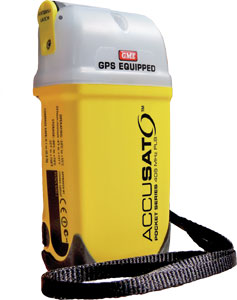
GME ELTMy personal locator beacon (PLB) battery expired recently – not, I hasten to add because I have been using it but because the battery has a finite life (in this case, 7 years), during which it is guaranteed to operate.

The beacon I have is a GME 410G, a superb, small, accurate and relatively inexpensive unit. My initial call to the GME service centre suggested they would change the battery free of charge – “great” I thought, after all, there’s not much aviation that’s free these days….But after trekking all the way there, the service person told me this was only applicable to new units (ie sold recently) not to mine. They would replace the battery for me at a cost – which was actually not much less than the cost of a new unit. And their replacement battery was only warranted a year, whereas the complete new unit has a 7-year warranty.

So buying a new unit became (almost) a no-brainer.

I started to look for a supplier. It soon became clear that aviation stockists charge a higher price than marine stockists. I guess this is because there are more boaties out there than pilots, but the difference between suppliers can be quite substantial. In fact, one marine stockist actually quoted me less than the replacement battery cost from GME – so it pays to shop around.

Overall, though, the coast works out at less than A$45 a year – less than a dollar a week – for legal compliance and at least some peace of mind if you do have to put down in the middle of nowhere. The GPS-equipped GME gives a re-assuring accuracy of around 100 metres.

An important point to remember: your PLB must be registered when new and then re-registered every two years with the AMSA (Australian Maritime Safety Authority) and their sticker applied to it. A CASA contact tells me that out of date PLB stickers are a common issue at ramp checks – remember, you must have a working, registered beacon if you fly more than 25 nautical miles from your base airfield.

The way we were

Interstate L6I recently acquired an old aircraft – a 1941 Interstate S-1A Cadet – there will be more information about this aircraft to come in the future.

With the aircraft came a ‘Pilot’s Flight Operating Instructions’ manual, which naturally I read with interest. Near the back is a section on cold weather operation, which includes the phrase: “Evergreen boughs may be used for brushing off light snow”.

Other interesting cold weather instructions include “Where [engine] heating facilities are not available overnight…drain the oil out on the ground and refill with fresh from the store before operation. This is far easier than trying to heat the oil system of the airplane to permit the flow of congealed oil”. And to round things off nicely: “Remember to include ammunition weight in centre of gravity calculations”.  How the world has changed…

In the back of the manual is a ‘Glossary of Nomenclature’ to help US personnel understand their British counterparts. Apart from obvious terms like the US ‘gasoline’ (petrol), ‘antenna’ (aerial) and ‘airplane’ (aeroplane), there are some which induce a bit of a smile: ‘engine’ (aero-engine), ‘battery’ (accumulator, electrical) and ‘fuel valve’ (fuel cock). Interestingly they quote the US term ’empennage’ for the British ‘tail unit’ which I’d have thought would be the other way round.

Many many years ago I owned a 1942 Willys army jeep. Apart from a placard on the fuel tank which indicated ‘Minimum 68 Octane Fuel’ (that probably means filling it with peanut butter would be OK) there was a great instruction in the maintenance book that read: “…to access and repair the transmission, first stand the vehicle on its side”. There are probably a few car service facilities outback who even today value that advice!

A22LS Foxbat – advanced short take-off

Short take offMike Rudd has made a new video showing how to take-off in your Foxbat in half the normal distance.

Click here for the full 2-minute story: Foxbat – advanced short take-off technique 

In summary:

– line up on the runway/take-off area
– do not apply flap, keep the elevator neutral
– apply the brakes and increase throttle to full power
– when full power is reached and stabilised, release the brakes
– be ready to correct the nose swing more than normal due to the full power
– as the airspeed goes through about 25 knots, smoothly pull on full flap and nudge the controls back a little to ‘unstick’ the aircraft
– fly level until the airspeed builds above 50 knots, then climb away as usual

This technique is useful on short strips or take-off areas which are soft.

CAUTION: be careful if the take-off area is covered with gravel or stones, as it is very likely the prop will be damaged if you apply full power when static on the ground. There is a slightly different technique for short field take-offs in these circumstances.

Here’s another link to a YouTube video of a Foxbat doing a short take-off using this technique.

Pilot watches

RolexI must confess – I am a bit of a watch nut. And being a pilot adds an extra dimension when it comes to the selection of my ideal watch.

First up, I love mechanical watches, particularly automatic mechanical watches. There’s something about the look and feel of a mechanical watch that quartz watches just don’t do for me. I love the way the second hand sweeps smoothly on a mechanical watch, compared with the tick-tick of a quartz watch second hand. And in my experience, the battery on quartz watches always goes dead when you’re miles from anywhere with a facility to change it.

Next, I want a really clear, easy to read dial – this is probably due to my advancing years and (allegedly) retarding eyesight, the need to see the time quickly at a a glance, even in bumpy air, and a love of the simplicity and elegance of an uncluttered watch face. Too many so-called pilot watches are cluttered up with numbers, extra dials and functions that you may use once in a blue moon, and when you do need to use them you can’t remember how!

Finally, as most of the times for pilots are quoted as UTC – that’s basically the same as  GMT and Zulu – and here in Australia we are anything from 8 to 11 hours ahead of GMT (depending on state and season), a dual-time or GMT indication is very useful.

But when I factor in the price, that’s when things get difficult…

Possibly one of my all-time favourites is the Rolex Explorer II with a white face. It meets all my criteria – except the main one: price. At around $7,500 it’s way out of my budget and even secondhand examples (if you can find one) are still very expensive.

SteinhartTorgoenAnother is the Steinhart Aviation GMT. It’s a lot less expensive at around $550 but seems almost impossible to find. At the lower end of the price scale are Torgoen watches – in the main they have quartz movements but they seem to be reliable and have some nicely designed faces. Their T25 GMT series starts at about $250 – of these, the T25104 with the white face would be my choice but the T25103 with a black face comes a close second, although reading the black-hand GMT pointer can be tricky until you know where to look.

Chr WardMy own watch is a Christopher Ward C11. This is an automatic mechanical watch with a lovely clear face. It doesn’t have a GMT indication, so I’ll have to make do with my OzRunways navigation app on my iPad. Unless my fairy godmother comes up with a Rolex…but who believes in fairies?


High flying in the Himalayas

Here’s a great article contributed by Captain Alexander Maximov from Avia Club Nepal. For photos of his experiences, please click here for the Foxbat Pilot Flickr Gallery.

Lima 1 copyFor the last 17 years I have been flying in the Himalayas. I believe it is one place every adventure and high flyer dreams to be. I fly both Foxbat A-22 three axis aircraft and weight shift microlights.

I love flying high and I do fly high. I usually do commercial flights in Pokhara and its periphery. A 26,250 ft peak is just 30 km from the airport where we take off. The highest we can go up to is usually about 12,000 ft above sea level but in some cases I am flying at 16,000 ft altitude. Nothing can beat the experience of soaring with the birds of prey up high in the sky. I do it every single day and get a different experience every time I do.

Its not that I don’t do low flights. But considering the terrain and the conditions we have in this region, high flying is the best. We fly one of the best aircraft for the job – the Aeroprakt A-22, so gliding if the engine stops is not a problem.

I have been with world champion glider pilots who fly even higher. There was recently a Polish gliding expedition team with their sailplanes. The height they fly is amazing – up to 22,000 ft. Flying with the mountains and even sometimes the mighty mountains below you is simply unexplainable.

I have flown many aircraft types and in every terrain worldwide but the love of flying in Nepal with its beauty has kept me here.

An open invitation to all you adventure flyers…come to Nepal and you will know the difference of FLYING HIGH by FOXBAT!

Many thanks, Alexander!

VHF aircraft radios are not all the same

OLYMPUS DIGITAL CAMERANot all VHF aeroplane radios are made to the same standards….and some can be prone to pack up when you least expect it. Like how? Well, as in many things in life, basically you get what you pay for. A cheap radio can mean cheap performance and reliability.

All plane radios are built to a specification, part of which is the selling price. Cheaper radios often – but not always – use cheap components. Cheaper because their tolerances are lower, there’s a higher fault rate for each batch of components or the circuitry is designed to leave out some potentially more expensive protection systems.

A case in point is voltage ‘spikes’. In the olden days, it was vital to switch off the radio before starting or stopping the aircraft engine. This was to make sure there were no sudden high voltages slamming through the radio. These sudden high voltage ‘spikes’ can wipe out all sorts of bits in the radio.

But modern radios have mostly been designed properly, use good quality components and are not prone to meltdown when you start and stop the engine. Unless….

Here’s an example – the radio works perfectly for a few weeks, even months. Then suddenly it stops transmitting, right in the middle of an approach to land at a busy airfield. You can hear everyone OK but they can’t hear you.

“Oh dear – you’ve had a voltage spike says the manufacturer, it’s damaged our radio. It’s the aircraft wiring/the way you use the radio/the weather’s too hot/too cold/too wet/too dry”. Anything but their fault. But really it is their fault – for using cheap parts and circuits which do not cope with the occasional voltage spike.

We all know who these makers are. But we still want cheap radios, so we risk cheap performance and a maker that isn’t interested in a warranty claim because they say it’s your wiring/weather/engine/airframe maker – anyone but them.

Switch them off I say. Buy a good radio from a well known manufacturer like Garmin, Becker, Icom, Funkwerk, TRIG, Bendix King, Apollo, etc etc. It is a real case of cheap is expensive. One day your life might depend on it.

Oil stains on the bottom of your aircraft?

One or two Rotax-engined aircraft owners have commented to me about ‘overflow’ from the oil breather tube which comes out of the Rotax oil reservoir/tank – often leaving a big brown stain all over the bottom of the aircraft. This can be very noticeable and leads to all sorts of concerns about what’s causing the tank apparently to become pressurised and release oil overboard. In fact, the amount of oil is very small, but the slipstream spreads it everywhere. Often, once the paint is stained, it’s almost impossible to clean off.

I’ve even heard from engineers, who are convinced there is something seriously wrong with the engine. While I’m not ruling this out in all cases, sometimes the problem is much simpler. There are basically three items to check before investigating the engine:

First, make sure the oil level is correct and not above the top mark on the dip stick after ‘bleeding’ (often called ‘burping’) the engine. Second, make sure the breather tube exits correctly through the cowling under the aircraft – contrary to one engineer’s assertion, the breather tube should NOT terminate INSIDE the cowling – see the Rotax engine installation manual.

Oil breather restricted

Oil breather tube restricted

Oil breather unrestricted

Oil breather tube unrestricted

Finally, have a look at these two photos. One shows an oil breather tube with a kink in it. The other photo is of a correctly installed tube. As you can see, the kinked tube is brown – mainly due to oil staining – and so is the bottom of the aircraft. The correctly installed tube, with no obstructions, is clean as is the bottom of the aircraft. It is essential that the oil reservoir is free to breathe!

So, before you start worrying about major engine problems, check the oil overflow tube. If It’s brown and discoloured, make sure it isn’t kinked or tied too tightly with cable ties. If necessary, replace it – or get a qualified engineer to do so. Bunnings Aerospace has an excellent selection of quality plastic tube which will do the job very nicely. Make sure the replacement tube is correctly cable-tied and routed away from the exhaust. And ensure there are no kinks or pinches in it.

Chances are, the overflow/breather problem will disappear.

More bush flying – Zimbabwe

Foxbat owner Mike Kellow, based in South Africa and Zimbabwe, has sent me a couple of photos of his Foxbat up in the tea estates in the Eastern Highlands of Zimbabwe.

The dirt strip is a short 250 metres long, with hills – including an 8,500 foot mountain – at each end, so approaches have to be tight and take-offs quick!

Full size versions of the photos are in the Bush Flying album on Foxbat Pilot’s Flickr site (click here to take you there).

Aberfoyle Tea Estates

Aberfoyle Tea Estate strip crop

Stop press – ABC1 Landline covers goat mustering

Goat MusteringFor Australian subscribers – today’s  ABC1 ‘Landline’ programme includes a section on commercial goat activity in Australia. Shots of a Foxbat in action are included!

The programme airs at 12.00 midday Sunday 22 June in the eastern states and repeats on Monday 23 June at 13.00.

And here’s a link to a BBC goat mustering video on the Foxbat Australia website – scroll down until you see it: Wild Goat Muster in Australia


Andrei Bezmylov

Andrei Bezmylov picI first noticed Andrei (or, rather his photos) through his superb pictures of the Foxbat on www.airliners.net This is a fantastic site containing thousands of (thankfully searchable) photos of just about every type of aircraft, from huge airliners down to almost unheard-of special amateur-builts. I did not realise at that time that Andrei in fact lives in South Australia and went to university in the Ukraine – home of the Foxbat. He was born in Siberia and moved to Australia in 1998 with a depth of engineering qualifications and currently works for an ‘Australian icon’.

Although it was the Foxbat pictures which first attracted my attention, Andrei has in fact almost 4,000 photos (yes, that’s 4,000!!) on airliners.net many of which were taken in Australia. He describes his photography as a ‘hobby’ but he is being extremely modest – if you have ever tried to enter a photo on airliners.net (I have) you’ll know just how exacting their standards are! So to have so many photos accepted is quite a feat. Those of you with eagle-eyes will have noticed in the photo above (courtesy of Sport Pilot magazine) that Andrei is not flying a Foxbat but another type of aircraft. Now I don’t hold that against him as he has been very generous with permissions to use his pictures on our website, and who knows, maybe one day he’ll see the light! Meanwhile thank you Andrei for your great photos – of whatever aircraft – and long may your hobby flourish. Thank you.

Here’s a link to Andrei’s photos on Airliners.net: Andrei Bezmylov’s Aircraft Photos